


I came away from Ovulation Calendar & Fertility with a fairly clear impression: it is a practical starting point for people who want to understand their cycle and identify potentially fertile days, but it should be treated as a planning aid rather than a promise of pregnancy. That distinction matters. The app’s appeal is its simplicity, its focus on one job, and the fact that it is free to use. Its weakness is the same thing: fertility is more complicated than a calendar can fully represent.
Developed by Leap Fitness Group, this parenting app is built around cycle tracking and pregnancy planning. Its store summary presents the idea of getting pregnant quickly and understanding the chance of pregnancy, while the shorter description reduces the concept to an ovulation calendar. In my experience, that makes the app easy to understand immediately. You do not need to learn a large health platform before reaching the part that interests you.
The app has attracted a strong audience, with an average rating of 4.8 from around 51 thousand ratings and more than 5 million installs. Those figures suggest that many people find the basic approach useful, although popularity should not be confused with medical accuracy for every individual. It is free, rated for Everyone, and runs on Android from version 6.0 onward, which makes it accessible to people using older devices as well as newer phones.
What the calendar does well in everyday use
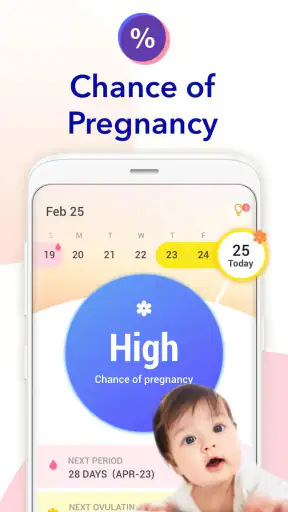
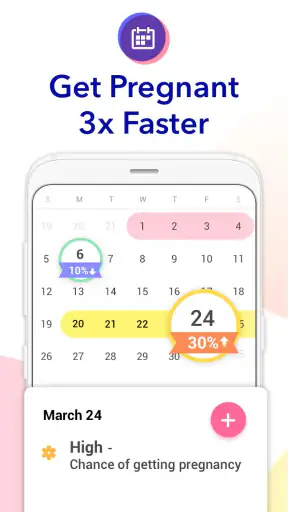
The best part of this app is the way it turns an abstract question into something you can check during an ordinary day. Instead of trying to remember cycle dates in a notebook or relying on a vague estimate, you can use the calendar as a visual reference when thinking about conception timing. That is especially helpful for someone who is just beginning to pay attention to ovulation and does not yet know which information is worth recording.
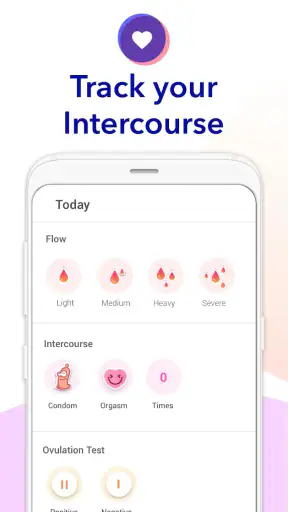
I found the focused design more useful than an overloaded health app can be. Many general wellness tools combine period tracking with exercise, nutrition, sleep, mood, medication, and unrelated reminders. Those options can be valuable, but they also create clutter. This app keeps the central idea in view: understand the cycle, identify the likely fertile window, and use that information when planning intercourse.
A realistic example would be a couple who has decided to try for a baby but has busy work schedules. One person can enter cycle information, check the predicted fertile period, and use that estimate to plan a little more intentionally instead of guessing throughout the month. The calendar does not remove the need for communication or flexibility, but it can make the conversation more concrete. That is a small benefit, yet it is often the difference between a tool being ignored and becoming part of a routine.
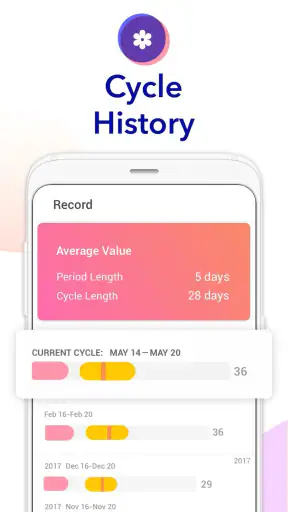
The most useful habit is consistent recording, not checking the prediction once. A calendar becomes more informative when it has a reliable history to work with. I would enter dates carefully, review the result over several cycles, and avoid treating one displayed fertile window as a fixed biological rule. This is a more sensible workflow than opening the app only when pregnancy is the immediate goal.
Why the focused approach helps beginners
For a first-time user, the app’s narrow purpose lowers the learning curve. You are not required to understand technical fertility terminology before making use of the calendar. The basic question is familiar: when might ovulation happen, and when could pregnancy be more likely? That straightforward framing makes the tool less intimidating than some fertility services that present extensive charts before explaining what they mean.
It can also help users notice patterns they might otherwise overlook. A cycle that seems predictable in one month may look different over time. Recording dates gives you a reference for comparing one cycle with another, which can be more useful than relying on memory. I would not use the calendar to diagnose anything, but I would use it to prepare better questions for a doctor or midwife if the pattern seems unusual or conception takes longer than expected.
Another practical advantage is cost. Because the app is free, trying it does not require committing money to a subscription before deciding whether cycle tracking fits your routine. That makes it a reasonable first step for someone who wants a simple fertility calendar rather than a full collection of paid reproductive-health tools.
Where it sits beside the usual alternatives
Compared with a paper calendar, this app is more convenient because the information is kept on the phone and the fertile period is presented as an estimate rather than something you calculate manually. Compared with a general period tracker, it is more directly aimed at people who are trying to understand fertility and plan for pregnancy. That focus is its clearest identity.
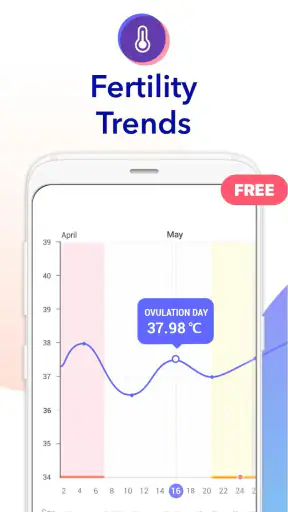
However, a dedicated fertility calendar is not automatically better than every alternative. Someone who already uses a comprehensive period app may prefer keeping all health records in one place. Someone who wants stronger confirmation of ovulation may be better served by combining cycle observations with ovulation tests, basal body temperature tracking, or professional medical guidance. Those approaches require more effort, but they can provide information that a date-based prediction alone cannot.
I would also distinguish between convenience and certainty. The calendar can organize dates and offer a useful estimate, but it cannot account perfectly for every factor that affects ovulation. Stress, illness, travel, hormonal changes, irregular cycles, and other personal circumstances can shift timing. That is why I see this app as a planning layer, not as a definitive fertility test.
The important limitation: a predicted date is not a guarantee
The main weakness is inherent in the format. Calendar predictions work best when a person’s cycle follows a reasonably consistent pattern. If periods are irregular, recently changed, affected by hormonal contraception, or difficult to record accurately, the predicted fertile window may be less dependable. The screen can still look precise even when the underlying estimate is uncertain, and that visual confidence may encourage users to read too much into it.
This matters in both directions. A couple might assume that pregnancy is unlikely outside the displayed fertile days, or they might believe that intercourse during the suggested period should lead to pregnancy. Neither conclusion is safe. Fertility does not follow a perfectly identical schedule every month, and the app should not replace contraception advice, medical evaluation, or a conversation with a qualified healthcare professional.
There is also a psychological trade-off. Tracking can make a couple feel organized and informed, but it can also turn intimacy into a timetable. If every day becomes a target, the process may feel stressful rather than supportive. My advice is to use the calendar as a guide for awareness, not as a command. Leave room for normal variation and avoid judging the success of a month solely by whether the predicted dates were followed.
People with irregular cycles should be especially cautious about depending on the calendar alone. They may still find it useful for recording history, but they should not assume that the fertile window is equally accurate for every cycle. In that situation, a clinician can help decide whether additional tracking methods or testing would be more appropriate.
How I would use it responsibly
I would begin by entering cycle information as accurately and consistently as possible. I would then treat the first predictions as provisional rather than final. After several cycles, I would look for recurring patterns instead of focusing on one highlighted date. This approach reduces the risk of mistaking a convenient estimate for a confirmed biological event.
I would also keep the app in its proper role. It can help answer, “When might we want to pay closer attention?” It cannot answer every question about fertility, explain why conception has not happened, or confirm that ovulation definitely occurred. If the goal is avoiding pregnancy rather than trying to conceive, I would be even more careful: a fertility calendar should not be treated as a standalone contraceptive method.
A useful, less obvious workflow is to use the calendar as a conversation record. If you later speak with a healthcare professional, having a consistent history of cycle dates may make that appointment more productive. The value here is not that the app diagnoses a condition; it is that organized observations are easier to discuss than vague recollections.
Who will get the most from it
I think this app is best for adults who are beginning to track their cycle, want a straightforward conception-planning aid, and prefer not to manage a large collection of health features. It is also a sensible choice for someone who wants to test a fertility calendar without paying first. The Everyone age rating describes its general accessibility, but the subject itself is naturally intended for people making adult reproductive-health decisions.
It may suit users who are comfortable with estimates and willing to record information regularly. It is particularly useful when the main problem is organization: forgetting dates, losing notes, or not knowing how to visualize the cycle. The app gives that process a dedicated home and may help users feel less uncertain about where to start.
I would recommend looking beyond it if you have highly irregular cycles, need clinical fertility support, want detailed symptom analysis, or expect laboratory-level confirmation of ovulation. It is also not the right choice for anyone seeking a diagnostic tool. In those cases, a doctor, fertility specialist, or a more comprehensive tracking approach is more appropriate than relying on a calendar prediction.
Before installing, I would ask myself one simple question: do I need a clear calendar, or do I need a complete fertility-management system? If the answer is a clear calendar, this app has a convincing case. If the answer includes testing, medical records, detailed observations, or professional support, it will probably be only one part of the solution.
My final view after using the app
Ovulation Calendar & Fertility succeeds because it makes cycle-based pregnancy planning approachable. Leap Fitness Group keeps the product centered on a recognizable need, and the free price removes an important barrier for first-time users. Its high average rating and broad install base show that the simple format resonates with many people, but I would still judge it by how responsibly it is used rather than by popularity alone.
My recommendation is positive but specific: use it to organize cycle information, identify possible fertile days, and build a more informed routine. Do not use it as proof that ovulation happened, as a guarantee that pregnancy will or will not occur, or as a replacement for medical advice. That balanced expectation brings out the app’s real strength while avoiding its biggest risk.
If you want an uncomplicated starting point for fertility tracking on an Android phone, this is a reasonable app to try. Give it time, record dates carefully, and interpret the calendar with common sense. For predictable cycles and practical planning, it can be genuinely helpful. For irregular cycles, health concerns, or a need for certainty, choose a more clinical or comprehensive option instead.
The current version is 1.038.GP, and the app has been available since August 2018. Those details matter less than the everyday verdict: it is a useful organizer with clear limits. I would recommend it to a friend who wants a free, focused fertility calendar, while making sure that friend understands that a helpful estimate is still only an estimate.


